A Transdisciplinary Approach for Climate Change Research
Monsoon Boathouse brings together household flood adaptation knowledge and traditional boatbuilding skills in Bangladesh. Seasonal inundation disrupts storage, livestock care, cooking, and sanitation, while unpredictable floods challenge established resilient practices. The project develops floating domestic extensions along existing homes. Working with craftsmen, it adapts local materials and construction techniques to prioritize usable space and stability. The first storage and livestock boat explores protection or belonging to crops and animals. Planned household implementation will inform kitchen, toilet, and resting spaces, supporting everyday life during floods while extending traditional craftsmanship through new applications, continued practice, and evolving knowledge of local people and affected communities.
Project Info
Design Team :
Craftsmen Team :
Funder :
Start-Up Funder :
Scale :
Project Duration :
Project Location :
Fahmidur Rahman, Kuo Jze Yi (Principal Investigator), MD Shaidujjaman, Nasif Chowdhury, Nazia Nawar Subha, Sakib Nasir Khan, Sadia Tarannum
Anonto Sutradhar, Gobindo Chandra Sutradhar (Head Craftsman), Lokkhon Chandra Sutradhar Ramprashad Sutradhar
Peking University, The Hong Kong Polytechnic University, China Social Work Research Centre
The University of Hong Kong
Building area: 20 sqm
2026 – Now
Koitta Bazar , Manikganj, Bangladesh
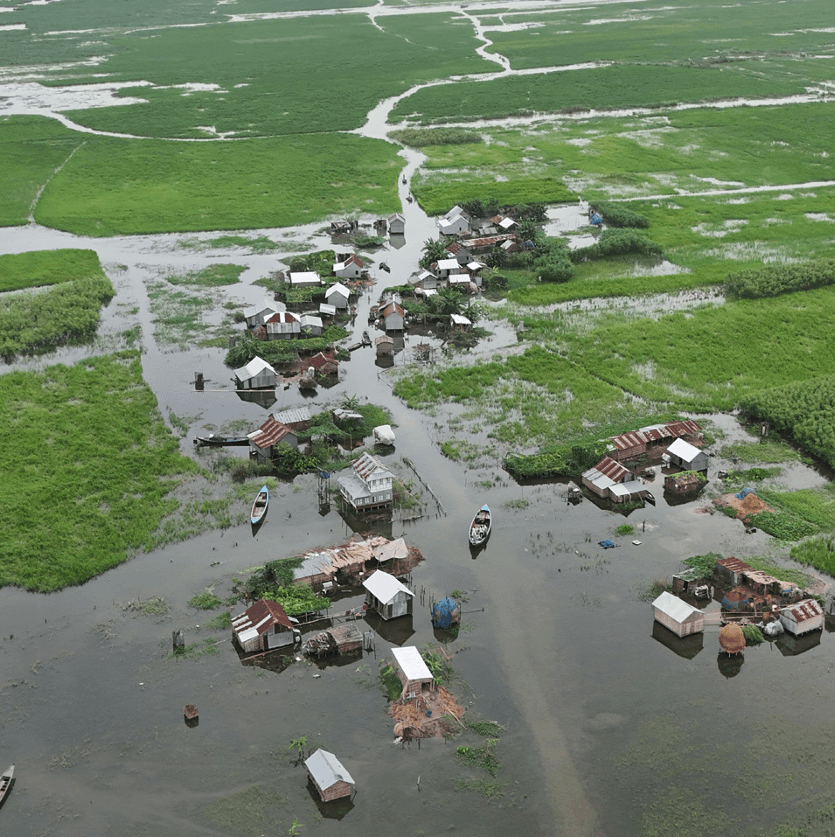
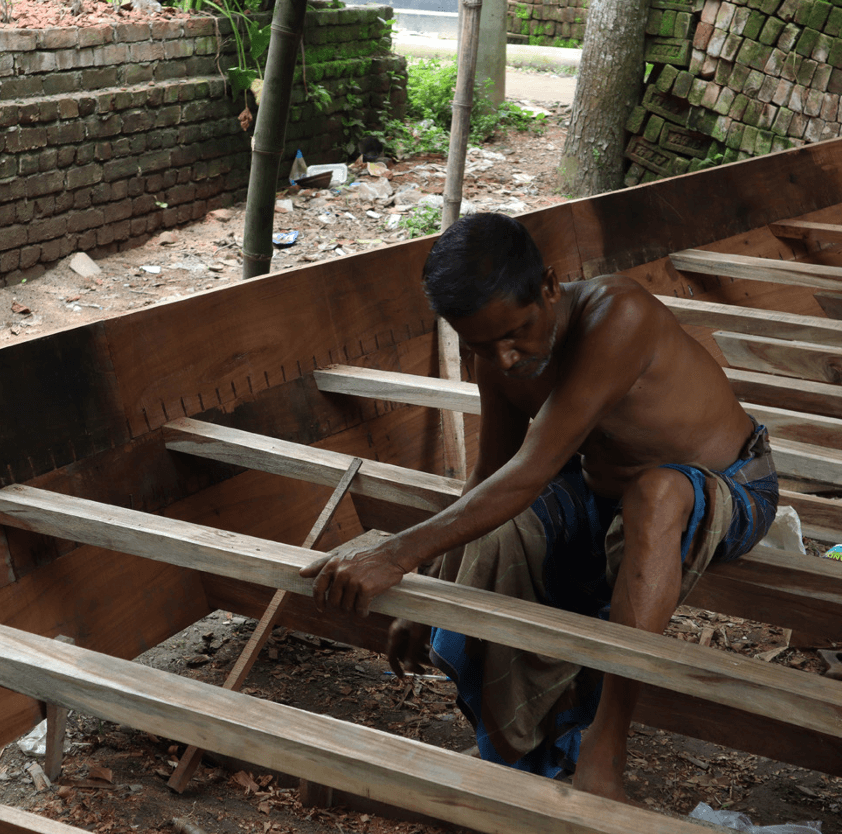
(Left) The flood-prone charlands of the Padma River experience seasonal inundation, submerging homes and surrounding landscapes. Traditional boat cratersmen carry a range of skills in woodwork, joinery, and boat making.
(Right) Traditional boat cratersmen carry generations of skills in woodwork, joinery, and boat making.
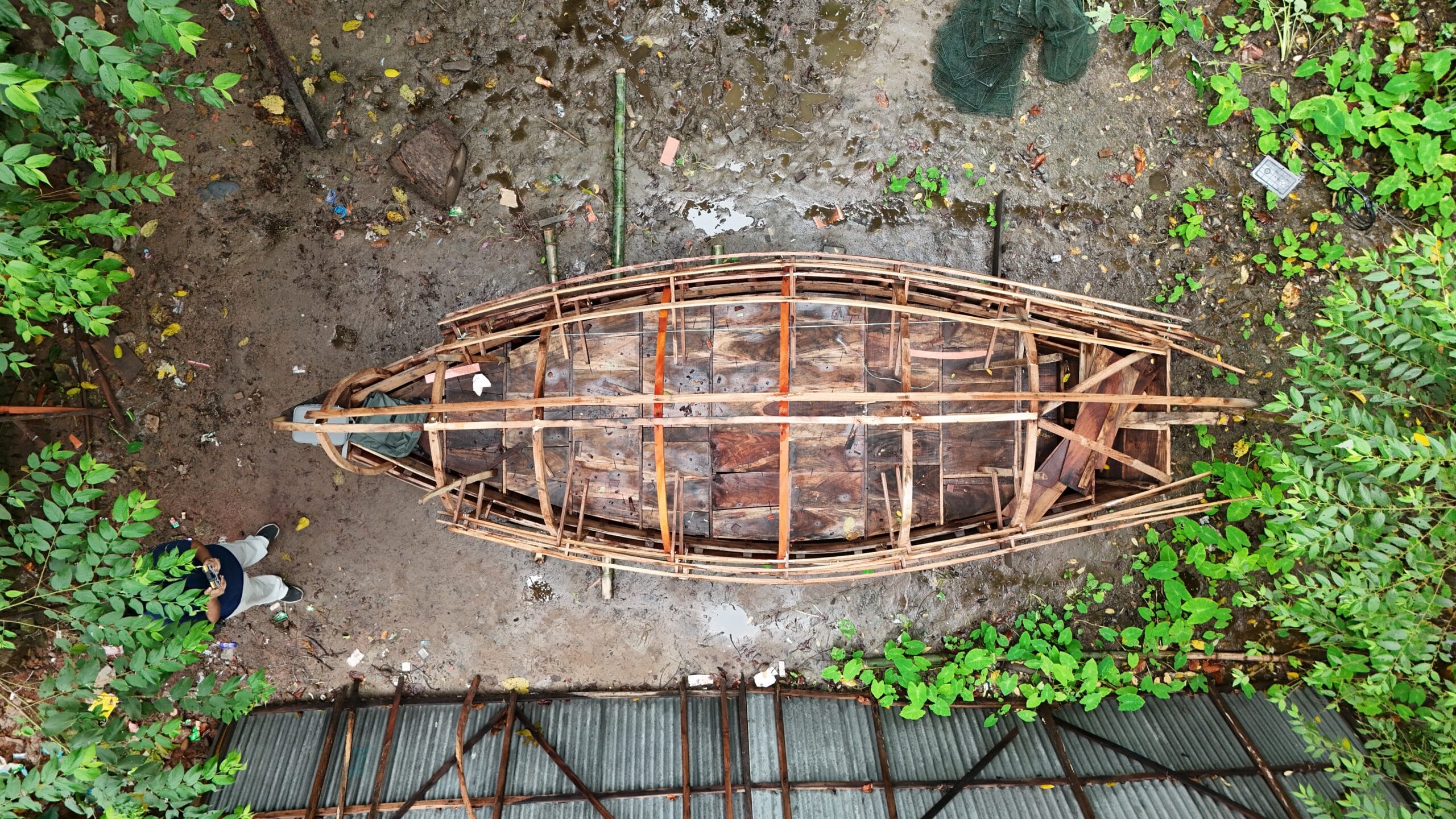
(Top) The wider hull design was studied to understand how traditional boats achieve stability, balance, and carrying capacity. This knowledge of proportion informed the adaptation of a floating structure suitable for functional space.
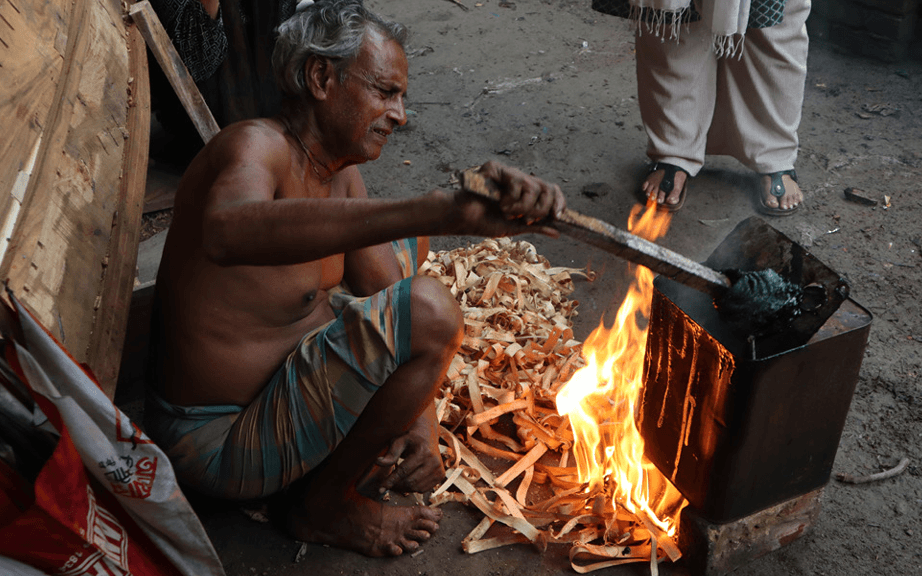
(Bottom Left) Local craftsmen prepared the wood using traditional techniques of heating, bending, and shaping. These methods allowed the material to have flexibility and strength, making it suitable for forming the curved buoyant shape of the boat.
(Bottom Right) The cratesmen worked on the wooden hull to create a removable surface that transforms the boat into a usable platform. This flexible space allows the storage boat to carry products, support livestock, and adapt to different needs during flood.
(Top) Small-scale physical models were created to study different structural arrangements. Through discussions with craftsmen, the design was refined to ensure that the construction method remained practical and achievable.
(Bottom Left) The wooden arched roof structure became a key structural element of the boat house. Cratsmen shaped and joined wood using their traditional skills, combining experience with new design ideas.
(Bottom Right) Corrugated iron sheets carefully installed over the wooden frame to complete the roof. The roofing is positioned to provide protection from rain and heat while allowing natural ventilation throughout the boat house.